Urethane vs. Oil-Based Finishes: What’s Best for Cabinets?
Urethane vs. Oil-Based Finishes: What’s Best for Cabinets? For painting your kitchen or bathroom cabinets, the prep, primer, and color all matter, but the finish you choose can make or break your long-term results.
June 16, 2025 · 2 min read
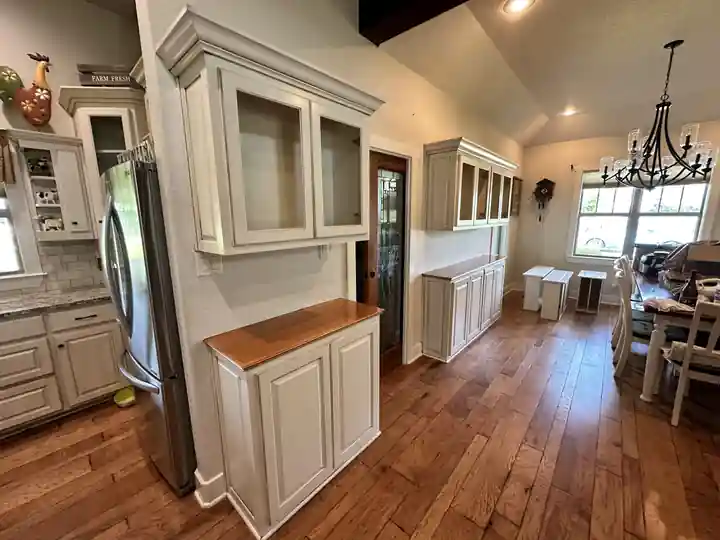
Urethane vs. Oil-Based Finishes: What’s Best for Cabinets? For painting your kitchen or bathroom cabinets, the prep, primer, and color all matter, but the finish you choose can make or break your long-term results.
At Quality Coats Painting, we help East Texas homeowners, from Tyler to Whitehouse to Bullard, navigate an important choice:
Urethane or oil-based finish: which one is better for your cabinets?
Let’s break it down, what each finish offers, how they compare, and which one we recommend depending on your home, lifestyle, and budget.
First, What’s the Role of a Finish?
A cabinet finish determines:
- The look: sheen level, smoothness, and clarity
- The feel: how hard, slick, or soft the surface is
- The durability: how well it resists grease, moisture, scratches, and scrubbing
In a place like East Texas, where humidity, heavy use, and frequent cleaning are daily realities, your finish needs to perform, not just look pretty.
Option 1: Urethane-Modified Water-Based Finishes
These modern hybrid finishes are designed to mimic the hardness of oil, but with the ease of water-based paints.
Pros:
- Low odor & fast drying, great for indoor use
- Non-yellowing (unlike oil)
- Easy cleanup with water
- Flexible and durable, resists cracking over time
- Available in satin, semi-gloss, or gloss sheens
Cons:
- May require more coats for full coverage
- Slightly longer cure time than oil, depending on product
- Requires proper surface prep and high-quality primer
Our Top Picks:
- Sherwin-Williams Emerald Urethane Trim Enamel
- Benjamin Moore Advance
- PPG UltraLast or BreakThrough
Option 2: Traditional Oil-Based Finishes
These are the old-school gold standard, known for their super smooth leveling and hard-as-nails durability.
Pros:
- Extremely hard finish once cured
- Great leveling, smooth, glassy results
- Proven long-term durability
Cons:
- Strong fumes and longer dry time (8+ hours between coats)
- Yellows over time, especially with white or light colors
- Requires mineral spirits for cleanup
- Not ideal for families sensitive to VOCs
Oil-based finishes are still used occasionally for specific high-wear areas, but most professionals are phasing them out due to environmental and practical concerns.
Side-by-Side Comparison
Feature Urethane-Based Oil-Based Dry Time 2 to 4 hours 8 to 24 hours Odor/VOCs Low High Yellowing Risk None High Cleanup Soap & water Mineral spirits Finish Hardness Excellent Excellent Recommended For… Most kitchens & baths Rare or specialty use
Our Expert Recommendation
For most East Texas homes, we recommend urethane-modified water-based finishes. They:
- Deliver a smooth, professional finish
- Resist humidity and heat in East Texas kitchens
- Don’t yellow or crack over time
- Are family- and pet-friendly
- Cure to a rock-hard finish that holds up for years
We’ve used these systems on hundreds of cabinets across Tyler, Flint, and Lindale, with amazing results.
Want a Finish That Looks Amazing & Lasts?
Urethane vs. Oil-Based Finishes: What’s Best for Cabinets? Whether you’re painting builder-grade cabinets or refinishing custom oak, our team will help you pick the perfect finish, so your cabinets don’t just look better… they perform better.
Click here to request your free cabinet quote Or call us today at (903)-282-8709
Keep Exploring:
Quality Coats Painting, (903) 283-8709
Call (903) 283-8709More articles
Should Interior Trim Be White or Match the Wall Color, and How That Decision Changes a Room
It is one of the most consequential color decisions in any interior painting project, and it gets made in about thirty seconds by most homeowners. White trim or trim that matches the walls?
Why Your Interior Paint Looks Shiny in Some Spots and Flat in Others, and How to Fix It
You painted the room carefully. You used the same can of paint throughout, the same roller, the same technique on every wall.