Ceilings
Ceiling painting in Tyler: stains sealed, edges cut, color chosen on purpose
High-build primer over seams and patches, a flat low-VOC finish that keeps flashing and lap marks out, and a straight answer on matching the walls or staying white.
Chapter 01
Stains, seams and the primer that holds them down
A ceiling shows its history. Roof leaks and plumbing stains, tape seams, old patches and joint compound all sit overhead where raking light finds them. Ordinary paint does not hide any of it for long, so the first coat on a ceiling is rarely the finish.
We start with a high-build primer that seals drywall seams and joint compound so the topcoat has even ground to grip. Stains get primed before they get painted. If a stain came from a leak, the source needs fixing first, because paint cannot hold back water.
White ceiling paint is also the most forgiving place to blend repairs. Patches, touch-ups and small fixes disappear into it far better than into a colored ceiling.
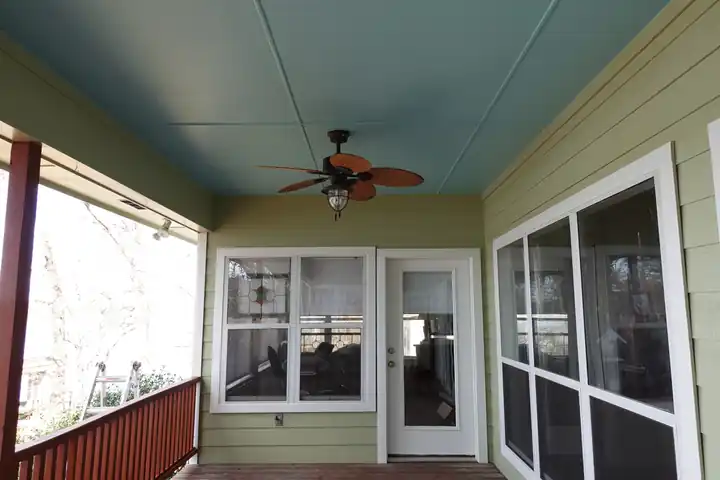
Screened porch with a pale haint-blue painted ceiling and sage siding
A flat finish, and why flashing and lap marks stay out
Ceilings want a low-VOC matte or flat finish. It scatters light instead of mirroring it, hides small surface flaws, and avoids the shiny and dull patches called flashing. Eggshell works on some ceilings, but the flatter the sheen, the less the ceiling tells on itself.
Flashing usually starts with an unprimed patch. Joint compound drinks the binder out of wet paint, so a repaired spot dries flatter than the paint around it, and no amount of extra topcoat fixes that. Primer on the repair first is what keeps the sheen even.
Application is overhead work, so equipment and technique matter. We cut in the edges with a brush, then cover the field with an even pass, using a sprayer where it suits the room, with masking and feathering to keep overspray off walls and fixtures and the edge crisp.
Chapter 03
Match the walls, or stay white
White is the default for good reasons. It reflects the most light, gives a clean contrast against colored walls, hides patches and keeps broad appeal if you sell. Matching the ceiling to the wall removes the visual boundary, so an eight-foot ceiling feels higher and a small room such as a powder bath, a closet or a laundry feels larger. It also suits deep, moody rooms.
A lighter shade of the wall color is the middle road. It keeps some color continuity with a soft line at the edge, and it works well with cooler colors. The cost of a colored ceiling is upkeep: touch-ups have to match exactly, and new wall colors later may fight it.
Before committing to color overhead, test it. Paint a sample board at least two feet square, hold it up in the room, and look at it in morning, midday and evening light. Live with it for a few days. We are glad to talk it through before any tape goes up.
Overhead work needs the right equipment and floors, fixtures and furniture covered first, which is how every Quality Coats crew starts. Insured, with a written 3-Year Limited Labor Warranty. Call (903) 283-8709.
Look up
The fifth wall, taped off like the other four
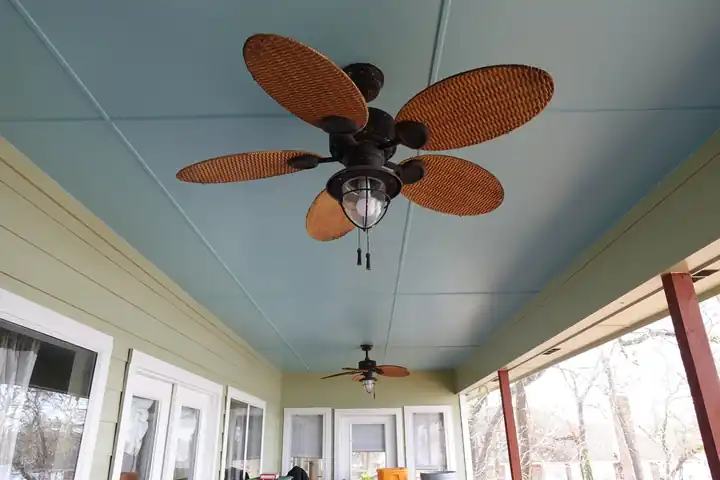
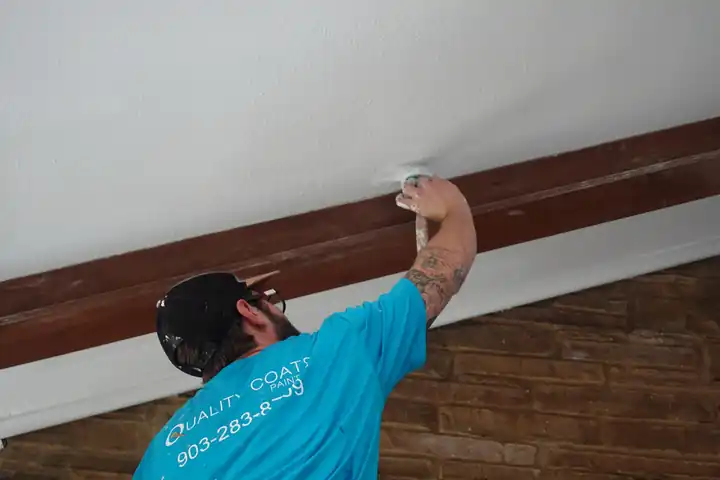
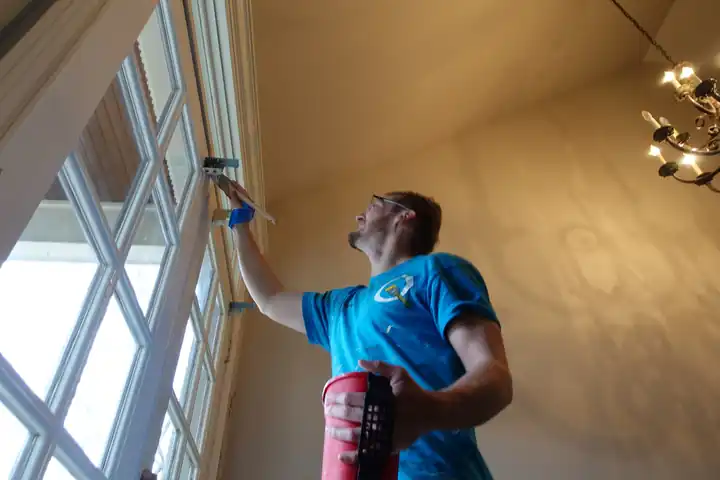
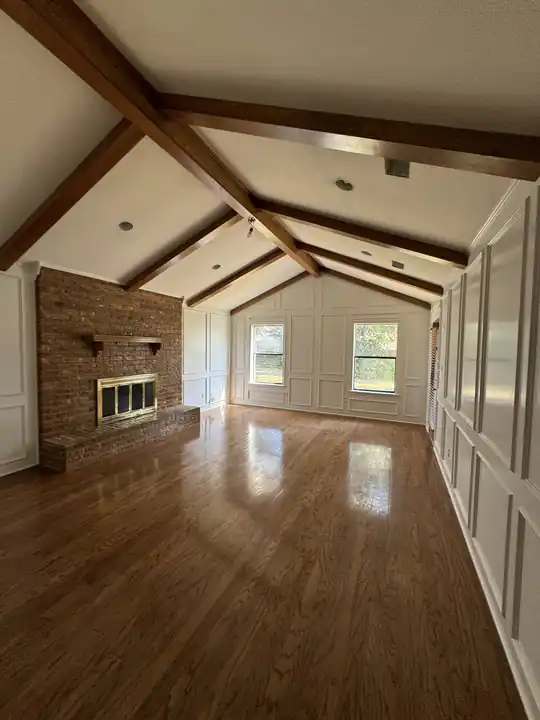
Same order overhead: floors covered, edges taped, seams primed, then the finish. A pale blue porch ceiling, a beam cut in over brick and a vaulted window grid all start with the tape. If you are weighing white against the wall color, our guide to matching walls or sticking with white covers the tradeoffs.
A ceiling usually goes with wall painting or a full interior repaint, and a color you are unsure about is what color consultation is for.
“We feel like our home has been given new life and it looks amazing!!”