Wall repair
Drywall repair in Tyler, fixed before the first coat of paint
Nail pops, settlement cracks, dents, tape seams and water patches: repaired, sanded, feathered and primed so nothing flashes or shows through the finish.
Chapter 01
Why the repair comes before the paint
Paint does not hide wall damage. Fresh paint often makes it easier to see, because light reflects across the new surface and picks out every bump. Nail pops, dents, cracks, torn paper, bad patches and water stains all stand out once the room is painted.
Skip the repair and you get visible blemishes under the new color, cracks that return, blotchy sheen and a finish that does not last. A smooth, sound wall is what makes a long-lasting, good-looking finish possible.
East Texas gives walls plenty of reasons to move. Shifting soils and humidity open settlement cracks, and temperature swings push fasteners out, especially in newer construction. We inspect every wall, ceiling and trim area before a brush comes out.
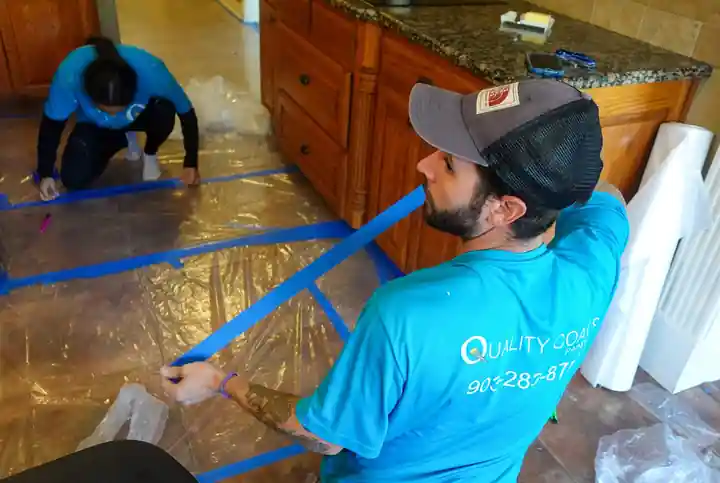
Two painters masking a kitchen floor with plastic and blue tape before wall work
Nail pops, cracks and dents get a different fix each
For a nail pop, we drive the nail or screw back in, or pull it and replace it, and secure the fasteners around it so the board stops moving. Then two to three smooth coats of joint compound, sanded flush, and a spot of primer.
For a crack, we open it slightly with a utility knife, add fiberglass mesh or paper tape if the joint needs it, and fill in several coats of compound. The edges are feathered wide so the repair has no ridge, and the patch is primed to seal it.
Light dents take lightweight spackle. Deep gouges and old anchor holes take joint compound. Scratches are sanded smooth and skim coated if they need it. Larger holes are cut out cleanly with a drywall saw, patched, taped and finished, and a texture is matched where the wall has one.
Chapter 03
Primer, feathering, and the patch that will not flash
Joint compound is porous. Put paint straight over an unprimed patch and it drinks the binder out of the wet coat, so the repair dries flatter and duller than the wall around it. That is flashing, and extra finish coats do not cure it. Primer over the repair does.
Feathering matters just as much. Compound is applied with taping knives and sanded with care to taper the edge, which prevents the ridge and shrinkage that make a patch telegraph through the finish. We sand for a dust-controlled result and wipe the walls clean before priming.
Only then does color go on: spot prime or full prime depending on the surface, then your chosen paint and sheen. When we are done you should not be able to tell the damage was there.
The repair crew is the painting crew, so the walls are fixed by the people who will paint them. Insured, with a written 3-Year Limited Labor Warranty on the labor. Call (903) 283-8709.
Fix it before the paint
The walk-through sheet: what we look for, and what we do about it
Checked at inspection
Nail pops
Drive or replace the fastener, secure the nearby ones, two to three coats of compound, sand flush, spot prime.
Settlement cracks
Open with a utility knife, mesh or paper tape if needed, several thin coats, feather the edges, prime to seal.
Dents and dings
Lightweight spackle for light dents, joint compound for deep gouges and old anchor holes, sanded smooth.
Tape seams and corner cracks
Fresh tape, compound and corner bead where a joint has opened, feathered so it does not crown or shrink.
Water stains and damage
Looked at before anything else. A stain may need sealing or further repair, and the source needs fixing first.
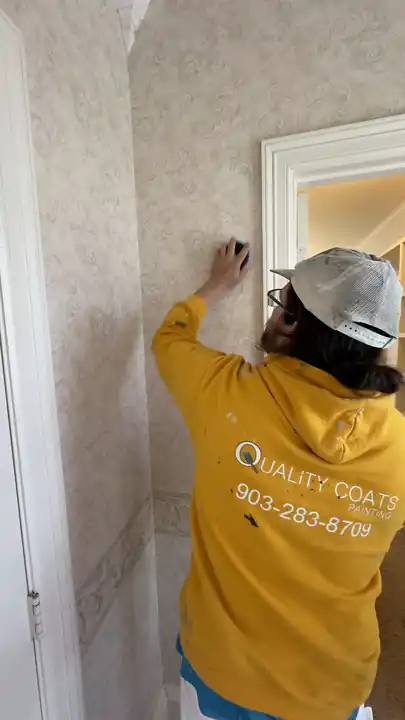
“the guys that came out to paint the house, not only did an excellent job prepping, they did an outstanding paint job!”
Read the short answer on whether drywall repairs come before painting, or the full wall prep process. Once the walls are sound, they go on to wall painting, interior painting or, if old paper is in the way, wallpaper removal.