Interior walls
Wall painting in Tyler, with the prep done before the paint opens
Primer to seal the surface, cut lines drawn with an angled brush, the right nap on the roller and a finish chosen for the room. Floors and furniture covered first.
Chapter 01
Choosing the finish for the room
Sheen is a decision about the room before it is a decision about the paint. We work in finishes from eggshell to semi-gloss and match them to what the walls will go through: hands and scuffs in a hallway, steam in a bathroom, grease near a kitchen, quiet light in a bedroom.
Lighting and room size change how a finish reads, so we ask about both before we suggest anything. A flatter sheen forgives small flaws in the wall underneath. A higher sheen shows every one of them, which is why the finish conversation and the repair conversation happen together.
We use trade paint with strong hiding power and low-VOC formulas built for interior wear, and we help you match tones to the light in your own rooms rather than to a chip under a store bulb.
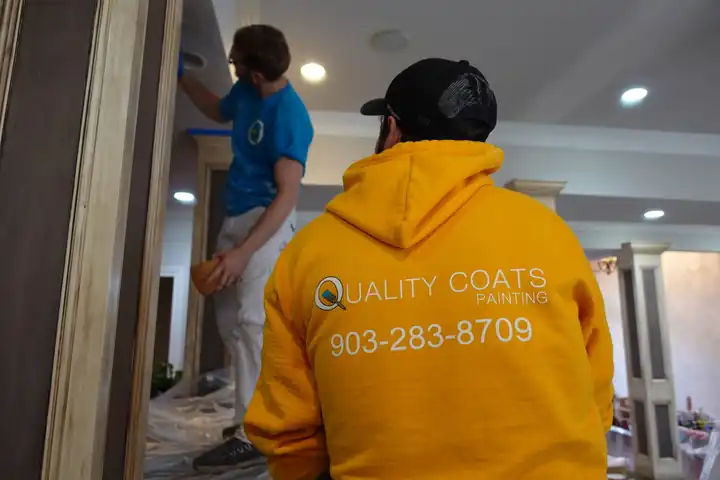
Quality Coats crew in gold hoodies painting a living room
Covering deep colors without a five-coat marathon
A dark wall under a lighter new color is a chemistry problem, not a coat-count problem. Dark pigments have high tinting strength, so they keep reading through a thin topcoat no matter how many you stack on top.
The fix is the sequence. We seal with a high-quality primer, tint the primer toward the new color when the jump is big, then put two topcoats over a surface that already sits close to the target. Done in that order, a deep color is a two to three coat job.
East Texas humidity stretches recoat times, so we wait for the film to dry through, not just feel dry to the touch, and keep air moving in the room. Rushing the recoat is how one wall ends up with two different looks.
Chapter 03
A two-person crew, one wall at a time
Each job runs with a foreman painter and an apprentice, supervised by a production manager. Floors, furniture and fixtures are covered before a lid comes off, and walls are patched, caulked, scuff sanded and primed so the topcoat has something sound to grip.
Cutting in comes first: angled brushes and Frog Tape give a crisp edge at trim, ceilings and fixtures. Then the roller, with the nap matched to the wall and laid off to avoid lap marks. On large walls a sprayer gives even coverage, with masking to keep overspray off everything else.
Most rooms take one to two days, depending on prep, the number of coats and the condition of the walls. We finish with touch-ups in color-matched paint and a walkthrough with you before the crew leaves.
Quality Coats Painting walls are done by an insured crew and backed by a written 3-Year Limited Labor Warranty. Call (903) 283-8709 and we will look at your rooms with you.
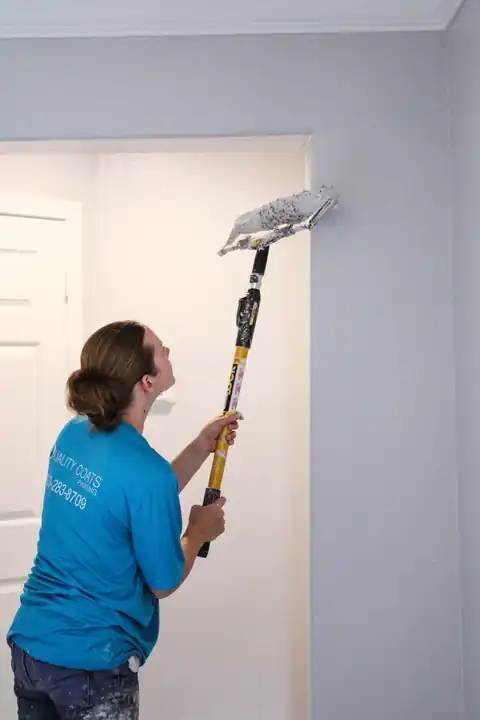
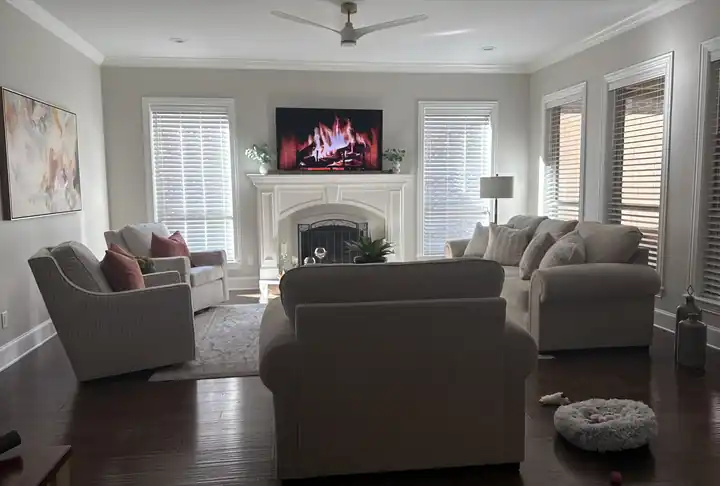
Prep, Protect, Paint
One wall, three passes, one clean edge
Prep
Holes and cracks patched, gaps caulked, repairs feathered flush, the surface scuff sanded for grip and primed where it needs it. Bigger damage gets the full treatment on our drywall repair page.
Protect
Drop cloths and plastic over floors, furniture and fixtures. Frog Tape on every edge that has to stay clean, so the line you see at the trim is the line the tape protected.
Paint
Angled-brush cut-in, roller work with no lap marks, and color-matched touch-ups at the end. Not sure about the color yet? Start with color consultation, or see how the same order runs through a whole interior painting job.
“The prep work, attention to detail, and final walkthrough really sets them apart from the other companies and contractors we’ve used previously at our property.”